
Data centers are the backbone of modern businesses, housing critical servers and networking equipment that must operate 24/7. Even a brief power outage can lead to significant data loss, operational disruption, and financial repercussions. This is where an Uninterruptible Power Supply (UPS) system becomes indispensable.

Why a UPS is Critical for Data Centers
A UPS provides immediate, short-term power when the main power source fails, allowing your critical systems to remain operational or to gracefully shut down. For data centers, the primary goal is often continuous operation, making the right UPS selection paramount.
The Unsung Hero: How UPS Systems Work
At its core, a UPS system acts as a bridge between your critical equipment and the utility power grid. When the grid power is stable, the UPS charges its internal batteries. The moment a power anomaly occurs – be it a blackout, brownout, surge, or spike – the UPS seamlessly switches to battery power, providing clean and consistent electricity without any interruption. This is crucial for sensitive electronics that can be damaged or lose data from even momentary power fluctuations.
Modern UPS systems utilize advanced technologies like 'double conversion' where incoming AC power is converted to DC to charge batteries and then converted back to clean AC power. This isolates your equipment from almost all power disturbances on the utility line, ensuring the highest level of power quality.
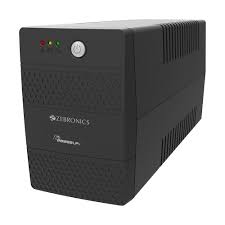
A typical compact UPS unit providing essential power protection.
Key Factors to Consider for Data Centers:
- Capacity (kVA): This is the most crucial factor. You need to calculate the total power consumption of all your data center equipment, including servers, storage, networking gear, and cooling systems. Always factor in future growth and choose a UPS with at least 20-30% more capacity than your current needs to accommodate expansion and prevent overload.
- Topology:
- Online Double Conversion UPS: Provides the highest level of protection, continuously converting AC to DC and then back to AC, isolating connected equipment from all power disturbances. This is the gold standard for mission-critical data centers, offering zero transfer time to battery power.
- Line-Interactive UPS: Offers good protection for less critical applications, providing voltage regulation and battery backup. It's more efficient than online UPS for non-critical loads but has a small transfer time.
- Standby (Offline) UPS: Basic protection, switches to battery power only when the main power fails. Not recommended for data centers due to the brief transfer time which can be disruptive to sensitive IT equipment.
- Runtime: How long do you need the UPS to power your equipment? This depends on whether you have a generator for long-term backup. If not, the UPS must provide enough runtime for an orderly shutdown or until utility power is restored. Consider modular battery packs for flexible runtime expansion.
- Scalability: As your data center grows, can the UPS system expand to meet increased power demands without a complete overhaul? Modular UPS systems offer excellent scalability, allowing you to add power modules as your requirements increase.
- Redundancy (N+1, 2N): For maximum reliability and to eliminate single points of failure, consider redundant UPS configurations. N+1 means you have one extra component than what's strictly necessary (e.g., 3 UPS modules for a load requiring 2), while 2N means you have two entirely independent power paths from beginning to end.
- Management and Monitoring: Modern UPS systems come with advanced network management cards and software. These allow remote monitoring, management, graceful shutdown of servers, and automatic alerts for power events via SNMP, web interface, or email, providing peace of mind to IT administrators.
- Efficiency: Higher efficiency UPS units reduce energy consumption and operational costs significantly, especially in large data centers where power consumption is a major overhead. Look for ENERGY STAR certified models.
- Service and Support: Ensure the UPS provider offers comprehensive installation, maintenance, and 24/7 technical support. A reliable partner like Gravity Power Solution is crucial for immediate assistance in case of any power emergency.
Beyond Data Centers: UPS in Everyday Life
While often associated with large IT infrastructure, UPS systems play a vital role in protecting various other sectors and even our homes. From ensuring that medical equipment in hospitals continues to function during power cuts, to safeguarding sensitive scientific instruments in laboratories, and protecting point-of-sale systems in retail, UPS offers an essential layer of protection against the unpredictable nature of power grids.
Even for home users, a small UPS can protect your desktop computer, gaming console, or internet router from sudden shutdowns, preventing data loss and hardware damage during brief outages. It's a small investment for significant peace of mind.
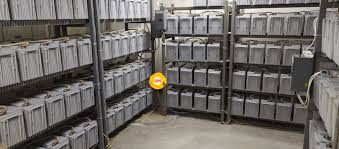
A typical large-scale battery bank providing extended runtime for critical loads.
Gravity Power Solution: Your Partner for Data Center UPS and Beyond
At Gravity Power Solution, we understand the unique power requirements of data centers and various other industries. We offer a wide range of high-capacity, online double conversion UPS systems for rental and purchase, along with expert installation and comprehensive Annual Maintenance Contracts (AMC) to ensure your data center and other critical operations remain powered and protected.
Don't compromise on your data center's power reliability. Contact us today for a free consultation and let our experts help you choose the perfect UPS solution tailored to your needs.
Back to Blog